
Selecting Decking Materials for Durability and Value
Pressure-treated pine is the cheapest deck to buy and the most work to keep, composite is the reverse, and cedar sits in between. How the three compare on upkeep, heat and long-term cost, and the ledger, fastener, railing and stair details that matter more than the boards.
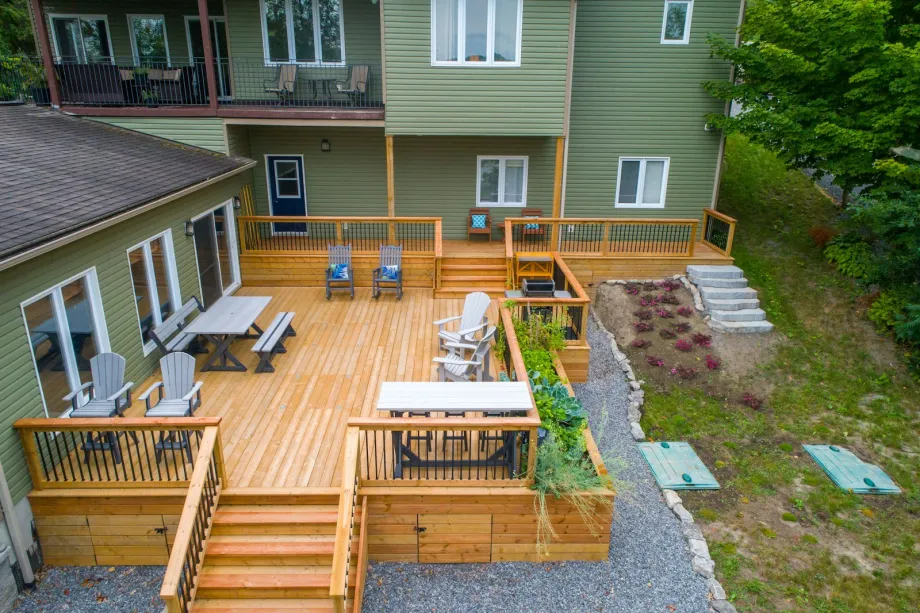
Three common decking choices
The framing under almost every deck is pressure-treated lumber. The choice is the walking surface, and each option carries its own maintenance routine and its own quirks.
Pressure-treated pine
Treated decking is softwood, most often southern yellow pine in the East and South, forced full of preservatives under pressure to resist rot and insects. It usually arrives from the lumberyard still wet. As it dries on the deck it shrinks across its width, and boards that are not fastened well can cup, twist and check. It is strong and takes a beating, and it is the least expensive to buy. The cost comes later, in cleaning and refinishing to keep the surface from splitting and graying.
Western red cedar
Cedar's natural oils give it decay and insect resistance without chemical treatment. It is more stable than treated pine, taking on and giving up moisture evenly, so it warps and splits less. It is light, cuts cleanly and lies flat. It is also soft: chair legs, high heels and dog claws dent it. Left alone, it weathers to silver gray; keeping the reddish color means refinishing on a regular schedule.
Capped composite
Composite boards mix plastic with wood fiber, and most current boards have a harder plastic cap fused over the core to block water and stains. They do not need stain and will not splinter. They are also less stiff than wood, so joists usually need to be closer together, and they expand and contract along their length with temperature, so end gaps must follow the manufacturer's chart for the temperature on install day.
Upfront price and long-term cost
Treated pine is the cheapest to buy and install. Every few years, though, it needs cleaning, brightening and a fresh coat of stain, and over a decade or two those materials and weekends add up.
Cedar costs more than treated pine for the boards, while labor is similar because it is easy to work. It still needs regular sealing, though a clear or lightly tinted finish goes on faster than a heavy stain on rough pine.
Composite costs the most up front. The boards are more expensive per foot, and the framing can cost more too: a diagonal pattern or a picture-frame border often needs extra joists or blocking. The return is years without sanding, stripping and staining. Whether that pays back depends on how long you plan to stay and how you value your own weekends.
Upkeep by material
New treated pine needs to dry before it takes a finish. Stain applied over wet wood traps moisture and peels. Once it has dried, the cycle is to sweep, clean with an oxygen bleach deck cleaner, rinse, and apply a penetrating semi-transparent stain, then repeat when water stops beading.
Cedar needs protection unless you want the gray. A breathable oil-based finish slows the sun's damage to the surface fibers, which otherwise turn gray and loosen. Mildew needs scrubbing off before each new coat.
Composite skips the sanding. Sweep it, and wash it with mild soap and a soft brush a couple of times a year. Dirt left in the grooves can grow mold on the cap layer, which cleans off. Use only cleaners the board's manufacturer approves; some products are harmed by bleach or harsh chemicals.
Heat underfoot
Color matters most. Dark boards absorb more sun and get hotter. Wood generally stays more comfortable to bare feet than composite, and cedar is among the coolest. Dark brown or charcoal composite can get too hot to walk on in full summer sun. On an unshaded deck facing south or west, choose a light composite or a wood deck, or plan for a pergola or shade sail.
The connections that matter
Ledger flashing
Most deck collapses start at the house connection. The ledger board fastens the deck to the house rim joist, and water that gets behind it rots both the ledger and the house framing.
A good ledger detail starts with removing the siding where the ledger will go. A self-adhered membrane goes on the sheathing, and metal flashing laps behind the siding above and over the top of the ledger so water runs out over it, not behind. Some builders add spacers so water can drain between ledger and wall. Fastener type, size and pattern are specified by your local code; inspectors look closely here. Some walls, including brick veneer and cantilevered floors, are not suitable for a ledger, and the deck has to stand on its own posts.
Fasteners and hardware
The copper-based preservatives in treated lumber corrode plain steel. Electroplated or uncoated screws and hangers can rust through within a few years in wet wood.
Use hot-dip galvanized hardware rated for treated lumber, or stainless steel. Near salt water or a pool, stainless is the safer bet. Composite boards need screws made for them, or hidden clip systems that fit grooves in the board edges. A regular wood screw tends to push up a crater of material around the head.
Railings and stairs
Guards and stairs are where deck failures injure people, and codes treat them strictly.
Guard posts
A guard post has to resist a strong outward push without wobbling. Posts screwed only through the decking, or notched deeply into the rim joist, are weak. Codes and tested hardware call for posts bolted through the rim with blocking in the joist bays, often with metal tension ties. Your local code sets guard height and when a guard is required, commonly 36 inches once a deck is more than about 30 inches above grade.
Stairs
Stair stringers carry concentrated loads. Spacing depends on the tread material: wood treads can usually span farther than composite, which commonly needs stringers closer together. Check the tread manufacturer's figure.
Risers must be consistent from the bottom to the top. Codes commonly limit the variation between the tallest and shortest riser to a small fraction of an inch, because people stumble on a step that differs from the rest. Rest the bottom of the stringers on a concrete pad or footing, not bare soil, so they stay dry and the stair stays square.
Frequently asked questions
How long does a pressure-treated wood deck last?
It varies widely with climate, sun exposure, ventilation under the deck and how well it is kept up. A deck that is cleaned and refinished regularly, with a properly flashed ledger and posts kept off wet soil, lasts far longer than one left to weather. Have the framing and ledger checked periodically on any older deck.
Why does composite decking require closer joist spacing?
Composite boards are less stiff than wood of the same size, so they sag more between supports. Manufacturers commonly allow 16 inches on center for boards laid square to the joists and call for closer spacing, often 12 inches, for diagonal layouts and stair treads. Follow the specific product's installation guide.
Can you use standard screws to install a deck ledger board?
No. Ledger attachment is set by code and checked by the inspector, commonly with half-inch through-bolts or lag screws in a set pattern, or with structural screws listed for ledgers. Fasteners must be rated for treated lumber, and some walls, such as brick veneer, cannot carry a ledger at all, in which case the deck is built freestanding.
How do you stop deck boards from getting too hot in direct sunlight?
Choose lighter colors and, if possible, give the deck some shade. Dark composite boards can get uncomfortably hot under full sun. Wood generally stays cooler than composite of a similar color, and cedar is among the more comfortable woods underfoot.